16.
The Castle of Otranto by
Horace Walpole
First published in 1764, this is one of those books that most people read for historical purposes. Horace Walpole essentially started, not only the
Gothic movement, but the age of the novel. Of course, it is not the first novel, but that does not belittle it's effect. You can see it stretch all through the Gothic movement it started, but also through literature of the 19th century and into 20th century horror novels. Granted, reading it now, it's not so scary as it might have been. The image of a man being crushed to death by a giant helmet is always a shocking one though.
17.
A Canticle for Leibowitz by
Walter M. Miller, Jr.
Moving nearly two hundred years in the future, we find
A Canticle for Leibowitz, one of the most influential science fiction novels, and easily the most influential post-apocalyptic novels of all time. The story is devided into three parts: "Fiat Homo," "Fiat Lux," and "Fiat Voluntas Tua." Each piece, while taking place in the future, in a world changed by nuclear destruction, represents a period in history. The nuclear holocaust that preceded represents the
Fall of Rome; "Fiat Homo," the
Dark Ages; "Fiat Lux," the
Renaissance, and "Fiat Voluntas Tua," the
Modern Age. Shortly after the "Flame Deluge," came the "Simplification," when "Simpletons" burned every book and piece of writing they could find, for that, they thought, was the cause of the destruction before. Isaac Liebowitz created an order dedicating to hiding books and preserving knowledge. The story follows important instances during the life of this Order of Liebowitz and deals heavily with the notion of
recurrence. It is easily the best science fiction novel I've read.
18.
Idylls of the King by
Alfred, Lord Tennyson
Tennyson's
blank verse retelling of the story of
King Arthur and his knights is often seen as an allegory for
Victorian society, which is easy to understand; however, they can be just as enjoyable if read simply as stories of the greatest mythic hero in British history. While the poetry is not always as good as some of Tennyson's other works, it is easy to read and understand, which is essential when telling a story, whether in prose of verse. Another thing to keep in mind is that Tennyson did not sit down and write all of these one after the other. They were written over a period of over twenty years, which really only means that each poem can be read separately and understood just as well, so long as some basic knowledge of the Arthurian legend is had beforehand. My personal favorites are "Gareth and Lynette," "Balin and Balan," "Lancelot and Elaine," and "Pelleas and Ettare."
19.
Little Dorrit by
Charles Dickens
Before the
miniseries of this novel came out two years ago, it was not common to hear it discussed except by die hard Dickens fans. It was heaped among the lesser read Dickens novels such as
Martin Chuzzlewit,
Barnaby Rudge, or
Hard Times. While it may be less read, it is not less fantastic than his other works. Chesterton described
Little Dorrit as the saddest of Dickens novels, which I would have to agree with. It really is a melancholy novel, which I realize is not uncommon with Dickens; however,
Little Dorrit lacks something even the most melancholy Dickens novels have. Really, the only way to explain it without saying far more than I have room for right now, would be to recommend reading
David Copperfield and then
Little Dorrit simply to compare the characters. With these two novels, Dickens shows the reader two sides of the same coin. What I find most interesting is that I don't think he intended to do it.
20.
Caleb Williams by
William Godwin
The other title to this 1794 novel is
Things As They Are. William Godwin, the husband of pre-feminism feminist writer
Mary Wollstonecraft and father to
Mary Shelley, was writing with a very distinct purpose. That purpose was to show how things were in England, and if his word is to be trusted, things were not perfect. Divided into three volumes, the first tells the tale of country gentry Mr. Falkland and his rival. When his rival turns up dead after publicly insulting Falkland, one can only assume what happened. Caleb Willaims is a well-educated but poor servant in Falkland's house, and after hearing the story, he grows curious. A little too curious for Falkland's comfort, and soon, he is accused of thieving and lying. He throws the accusation back at Falkland and is quickly hated by all of England. One word I've heard quite often to describe this story is "fierce." It's a good term for not only the story, but the concept Godwin was trying to express. Justice is a fierce thing, but no where near as fierce as injustice; and that's truly what this story is driven by: injustice. Mr. Falkland evades justice and Caleb cannot seem to find it. Caleb becomes a criminal, hunted for a crime he did not commit. It is a intense look at the justice system of England, as Godwin saw it, in the late 1700's. My only complaint is that Godwin's style is that of a philosopher, not a novelist, and it can some times be distracting.
21.
Under the Greenwood Tree by
Thomas Hardy*
Academically speaking, there are two good reasons to read this novel. Firstly, it displays Hardy's early style and is foreshadows his later works. Secondly, Hardy shows a wonderful depiction of rural English life through the characters of the Mellstock choir, or quire. Some consider this last part the strongest part of this work, and I will admit, I find his depiction of country life highly enjoyable, but it is a common element in most of his novels and short stories. The main reason I read the novel again was for the love story. Thomas Hardy's novels are always full of tragic love stories, and often times with multiple characters in play. In
Far from the Madding Crowd, for example, Bathsheba Everdone has three men in love with her. One is murdered by the another one who is clearly insane, and the last one she marries quietly after her pride and spirit are broken. In
Under the Greenwood Tree with Fancy Day and her three suitors, things play out much less tragically. In fact, this novel stands out among Hardy's work for it's relatively happy atmosphere and ending, though it wouldn't be a Hardy novel if there wasn't some cloud on the horizon, right?
22.
The Mysterious Stranger by
Mark Twain
For those who are only familiar with Twain's earlier works,
The Mysterious Stranger might come as a shock. It was his last attempted novel, which he tried to write three times. The copy I read is the heavily edited edition by
Albert Bigelow Paine. It is mainly an edited version of Twain's first draft,
The Chronicles of Young Satan, with the ending to the last draft,
No. 44, the Mysterious Stranger. Let's go back to that Young Satan thing. The tale of is set in 16th century
Austria, where three boys meet--you guessed it--a mysterious stranger. This stranger reveals himself to be an angel named Satan, nephew to the fallen angel of the
same name. Throughout the novel, he teaches them the value of man and human life: nothing. It is a very dark message. When Satan explains that all of our choices are determined the very second we're born due to circumstances set in motion the day earth was created, I had to reanalyze my entire philosophy. I'm an advocate for free will, but there's something to be said for this argument of circumstance. Our choices are our own, but they are effected by outside sources beyond our control. Even our thought process is effected by circumstances we did not choose. But I'll not digress further.
23.
The Screwtape Letters by
C.S. Lewis*
This seems like a good follow up to
The Mysterious Stranger, but if I remember correctly, I started reading
The Monk first, but finished this rather quickly. I've read this book at least seven times, and by now I should know it backwards and forwards, but it had been nearly five years since I last read it. There's something wonderful about re-reading a book by an author you've come to read quite thoroughly. It gives a new appreciation of the work. While the work is full of spiritual insight and the token Lewis humor, reading it now, shows me different elements of Lewis that I didn't see when I first read it. On it's own though, the work is obviously a masterpiece, which can be appreciated by Christians and atheists alike, and it has been over the years. While Lewis' devils are, of course, representative of real devils (he believed in the devil, like any legitimate Christian), the way he displays them is also an attack of bureaucracy, where each person is only ever unselfish for selfish reasons. It is highly recommended to anyone.
24.
The Monk by
Matthew G. Lewis
The Monk is the climax of Gothic literature. That's not to say anything after isn't good or even better than it, but everything after was on the down hill side of the movement. That's not even to say
The Monk is the best piece of Gothic literature, but it seems to be an amalgamation of everything everyone had done before, with a little bit of a twist. Matthew Lewis was not opposed to showing the reading the atrocities his book is about. It's essentially the difference between a horror film and a thriller. And
The Monk is frightening is certain places. Dull in others, though. It is the story of lust destroying an otherwise holy man, and as a consequence, destroying many people around him. Ambrosio's lust is on full display, as well as the objects of his lust. You won't find your Victorian descriptions of women here. It is sexual and horrific, like a modern horror film teens go to in the Summer to see breasts and gore. For that reason, I would say, it lacks heavy intellectual merit, but considering Lewis wrote it in a matter of ten weeks before he was twenty, it's brilliance makes any of the failings seems rather small.
25.
Lolita by
Vladimir Nabokov
Having never read any Nabokov, I felt
Lolita was a good place to start. Let me first say, I don't think the book is bad. Far from it, in fact. Nabokov's use of prose is spectacular, but it can also be confusing.
Thomas Mann's
Death in Venice, however, as I pointed out in an earlier post, tackles the same concept with the efficiency and bleakness one would expect from a German. Humbert Humbert's account seems unlikely, though possibly, which I think is the point; but he, like many intellectuals, has a tendancy to ramble--a trait Mann's Aschenbach does not share. The main difference is that while Nabokov's story is convoluted and uniquely phrased, there isn't much underneath the prose beside one pervert's love for a young girl. Mann's story is told in straightforward manner, but it hides a deeper aspect. I would recommend reading both, but I would definitely recommend
Death in Venice before
Lolita.
26.
The Memoirs of Sherlock Holmes by
Sir Arthur Conan Doyle
What is there to say about Sherlock Holmes other than he's
f**king Sherlock Holmes. Seriously though, Holmes is perhaps the biggest badass in all of literature from the last hundred, maybe two hundred years. That's considering
James Bond was created within the last century. There's been a resurgence of Holmes lately, though he never went out of style, and this is easily my favorite collection of Holmes stories. It contains my favorites: "
The Adventure of the Yellow Face," "
The Gloria Scott," "
The Naval Treaty," and--of course--"
The Final Problem." The last is the infamous introduction of
Professor James Moriarty, and also contains what was meant to be the death of Sherlock Holmes. This is a wondrous collection of stories, but then again, aren't all the Sherlock Holmes collections?
27.
The Way of All Flesh by
Samuel Butler
Samuel Butler is one of those few people who thought they would only fully be appreciated after their death and happened to be right. His
magnum opus, written over a period of about ten years (1873-1884), was not published until 1903, one year after Butler's death.
The Way Of All Flesh was quite popular and is today considered one of the most influential novels of the 20th century. I must say, there's good cause for all the praise. It is a harshly written attack on
Victorian values, and while I found the style to be unique and enjoyable and the story quite interesting, my major complaint is all of his complaints. He seems to be shooting with a scatter-gun. Mr. Overton--the narrator--seems angry about everything. He would attack one thing and then criticize Ernest's attack against the same thing. Also, his attacks on Christianity--while understandable considering the strict
Calvinism he was dealing with--were lacking in any real merit. Anyone with a half-thorough knowledge of theology could tear down his arguments, but like I said, I understand why he was attacking it. Still, I'd recommend reading
George MacDonald's--also a Victorian--criticize of Calvinism instead.
28.
The Golden Legend: Selections by
Jacobus de Voragine
For those who are not aware of one of the world's first best sellers,
The Golden Legend is a collection of the lives of the Saints. Technically, Voragine did not write it, but merely collected the information from other sources, though he deserves more credit than a simple compiler. I'll not focus on that, however, and move on to the work itself. Being raised Baptist, we did very little study of the Saints, aside from the big ones--the
Apostles,
Mary (Magdalene, not the mother of Christ), early Christian martyrs, et cetera. So, aside from wanting to read more Medieval literature, I was naturally interested in the lives of the lesser known--or sometimes well known but Catholic--Saints. I read about most Saints on his or her feast day throughout the year, reading more sometimes and less sometimes, and finished in late November. The tales in here are at times quite fascinating as well as fantastical. Some of them read like fairy tales. Take the
Seven Sleepers, for example--a story I've blogged about before. What is especially interesting is reading the historical account of a saint--say,
Thomas Becket--and the Church's version. I'm sure the truth is somewhere in the middle. I'm quite eager to get the entire collection, rather than just selections, but I would recommend starting with this.
29.
A Room with a View by
E.M. Forster
I already blogged extensively on this novel, so I will say very little here. If anyone is truly interested in my thoughts upon the book, read my blog from December second. All I'll say here is that I could easily see myself reading this again, and look forward to reading
Where Angels Fear to Tread.
30.
The Song of Roland by Anonymous
Ah,
The Song of Roland, first of the
chanson de geste--is there really anything I can say about this that could actually express the pure badassery of it? This is the Medieval equivalent to
Die Hard, and might also remind modern readers of the plot to
300. I'd have to say though, even
John McClane and
King Leonidas wouldn't stand a chance against
Roland and
Olivier. Here's the basic idea:
Charlemagne has been invading Spain for a while now, and decides to leave after Saracen king
Marsile promises peace. It's all a trap though, and when Roland, twelve peers--including his best friend Olivier--and twenty thousand soldiers head up the rearguard, they are ambushed by Marsile's army of four hundred thousand. They fight to the last man--that being Roland, of course. Roland previously refused to sound his horn to alert Charlemagne, but now does so, bursting his temples from the blow. He dies on a hill, facing the enemy land. Charlemagne comes, and long story short, is mortified, but not so much that he can't heap a horrible vengeance on his foes. Based on historical events, but probably about as reliable a historic document as
300,
The Song of Roland is easily the greatest epic poem from the era. There's a lot more I could say about it, but I'll limit myself. Maybe I'll talk about it some other time.
Well, that is my finished list of the books I read this year. Hopefully next year's will be longer, but at least it's not shorter than last year's.
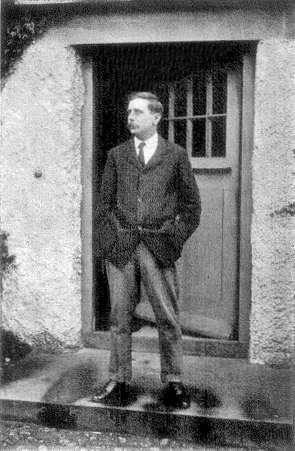 Science fiction, much like many children growing up in homosexual households, has two fathers. (One could make the obvious joke that that's why science fiction is so gay, but I find that joke in poor taste and will refrain from using it.) These two fathers are, of course, Jules Verne and Herbert George Wells, more commonly referred to as H.G. Wells.
 There always seems to be a bit of a debate as to who was the better science fiction writer: Verne or Wells. I think a large part of who you choose is determined by which one you grew up on, though I'll not voice my opinion of who is the more superior author.
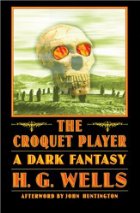 Now, I never intended for Wells to fade into the obscurity of authors long past, though I will admit, three years of not reading him might imply that. Remember my brief mentioning of a reading list for this year--the one Verne failed to make it onto? Well, while visiting my parents, I took a trip back to one of those bookstores in town and happened upon an old friend. Not only were these not in the science fiction section, which is where they usually kept Wells, they were books I'd never heard of before: The Croquet Player and Tono-Bungay. Maybe it was nostalgia or guilt or maybe the fact that neither were science fiction, but I was intrinsically drawn to the two books and quickly snatched them up. I meant to read them last year, but kept putting them off. Now, they've been put on my reading list, and I'm itching to get started on The Croquet Player, which is apparently a horror story.
